
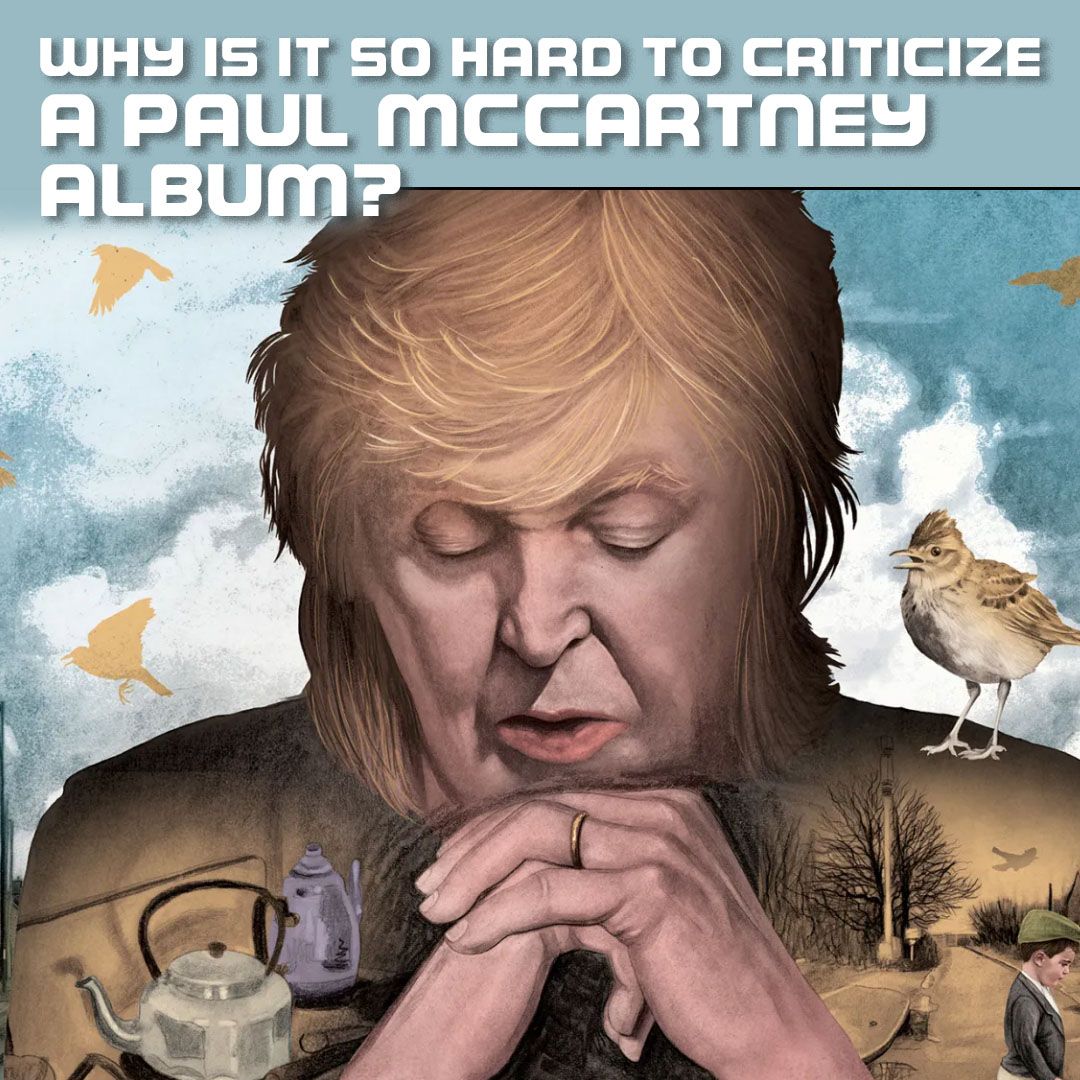
Why Is It So Hard to Criticize a New Paul McCartney Album?
Narrative Control by Desperate Fanboys
When I reviewed Paul McCartney’s The Boys of Dungeon Lane on my YouTube channel, I expected disagreement. That’s part of reviewing music. Having done reviews for many years, I have sadly come to expect viewers reacted as though even mild criticism of the album was somehow illegitimate. That reaction says something interesting—not just about McCartney fans, but about the way we talk about legacy artists today.
Was My Review Really That Negative?
After reading through the comments, I went back and watched my own review. I wanted to see whether I had actually been as harsh as some people claimed. What I found surprised me. I had praised several aspects of the record:
- McCartney uses his aging voice intelligently, choosing material that suits it.
- I thought the album was stronger than McCartney III.
- It felt more honest and less processed.
- The autobiographical themes made the songs immediately relatable.
- The record exceeded many people’s expectations.
- McCartney worked exceptionally hard promoting it.
- His efforts to reconnect with fans felt genuine.
Those were the positives. My criticisms were relatively modest:
- Many songs contained strong moments that weren’t sustained.
- I couldn’t find a song I loved from beginning to end.
- Some lyrics felt surprisingly ordinary.
That’s hardly a hatchet job. Yet for some viewers, one negative observation outweighed every positive one. Apparently, anything less than complete admiration counts as hostility.
The New Rule: “You Need More Listens”
The most common criticism wasn’t actually about my opinions. It was that I supposedly hadn’t listened to the album enough. This has become one of the most common ways people dismiss criticism. “If you don’t like it, you haven’t listened enough.” It’s an interesting argument because it creates a moving target. How many listens qualify? Three? Five? Ten? Twenty? Not one of my detractors offered an answer because the number of times one needs to listen to an album in order to like it is irrelevant.
More importantly, this standard isn’t even applied consistently. When McCartney III was released in 2020, reviewers weren’t given unlimited access before publication. Quite the opposite. Music journalists were allowed a single stream through a secure press portal with no downloads. Publications like Rolling Stone still published reviews based on that limited access. If one listen was sufficient for professional critics when McCartney’s own publicity team imposed the restriction, why is one or two listens suddenly considered invalid when someone doesn’t love a new release? The standard seems to change depending on whether the review is positive
.
Great Critics Have Never Needed Endless Repetition
One of the greatest critics of the twentieth century, film critic Pauline Kael, famously watched most films only once before reviewing them. Her reasoning was fascinating. She believed repeated viewings often shifted attention away from the emotional impact of the work and toward its technical imperfections. Whether you agree with her or not, her career demonstrates something important: Good criticism isn’t measured by the number of times someone consumes a work. It’s measured by the quality of their observations.
The Problem With Legacy Artists
What fascinates me most isn’t McCartney himself. It’s the ecosystem surrounding artists like him – McCartney, The Rolling Stones, Bob Dylan, Bruce Springsteen – These artists occupy a unique place in popular culture. They’ve earned legendary status over decades. The unintended consequence is that many reviews seem to judge not simply the new album but the entire career. When The Boys of Dungeon Lane arrived, headlines immediately called it a masterpiece. Not “very good.” Not “an impressive late-career effort.” A masterpiece.
That raises an important question. Can anyone honestly determine whether an album is a masterpiece during release week? Masterpieces require perspective. Perspective requires time. History has to do its work. The greatest albums became classics because decades of listeners kept returning to them—not because reviewers declared them masterpieces after a weekend.
Other Critics Had Reservations Too
One reason I wasn’t particularly bothered by the criticism directed at me is that my review wasn’t unusual. Several professional reviewers expressed similar concerns. Among the recurring criticisms were:
- the autobiographical concept wasn’t fully developed;
- the album lacked enough standout songs;
- parts of the songwriting didn’t reach McCartney’s highest standards;
- some listeners found the production overly polished.
You can agree or disagree with those assessments. That’s not the point. The point is that reasonable critics reached similar conclusions independently. Criticism wasn’t some fringe position.
Sales Tell Another Story
Commercial performance offers another perspective. In the United States, The Boys of Dungeon Lane debuted strongly before dropping rapidly from the charts after two weeks. The United Kingdom was considerably more supportive, where the album enjoyed a longer chart run (four weeks).
That’s become a familiar pattern for McCartney’s 21st-century releases. Compare those results with his releases from the 1980s and 1990s.
Albums like Tug of War, Flowers in the Dirt, Broad Street, and Flaming Pie remained on the UK charts for months rather than weeks. The difference isn’t necessarily a reflection of quality. Music consumption has changed dramatically. Streaming has fragmented audiences. Physical sales are lower. Older artists naturally appeal to older demographics. Still, the numbers suggest something important: McCartney remains an enormously successful legacy artist with a deeply loyal audience. But today’s audience is also more concentrated—a passionate niche rather than the mass-market phenomenon he once was.
Why Some Fans Stay Silent
Over the years, several viewers have told me privately that they were reluctant to post critical opinions publicly. Not because they disliked the music. Because they didn’t want the backlash. That’s unfortunate. Healthy music criticism depends on people feeling comfortable expressing honest opinions. When disagreement becomes socially costly, discussions become less interesting. Eventually, everyone simply repeats what they think they’re supposed to say.
Criticism Isn’t Disrespect
None of this diminishes Paul McCartney’s achievements. His place in music history was secured decades ago. Nothing written about one late-career album changes that. If anything, great artists deserve thoughtful criticism more than anyone else. Treating every new release as untouchable doesn’t honor their work. It reduces criticism to marketing. The goal of reviewing music shouldn’t be to protect legends from disagreement. It should be to understand the music honestly. Sometimes that means celebrating greatness or pointing out shortcomings. But most often, it means doing both at the same time.
Check out corresponding video https://www.youtube.com/watch?v=HlTG65iyDv0&t=142s
share this
Related Bands, artists, and producers
Related
SIGN UP FOR OUR NEWSLETtER
Receive updates from Pop Goes the 60s, with interesting essays, alerts about new videos, and more!